
A PRACTICAL GUIDE
Read Your Medical Records
Your medical record tells a story. Make sure you’re part of it.
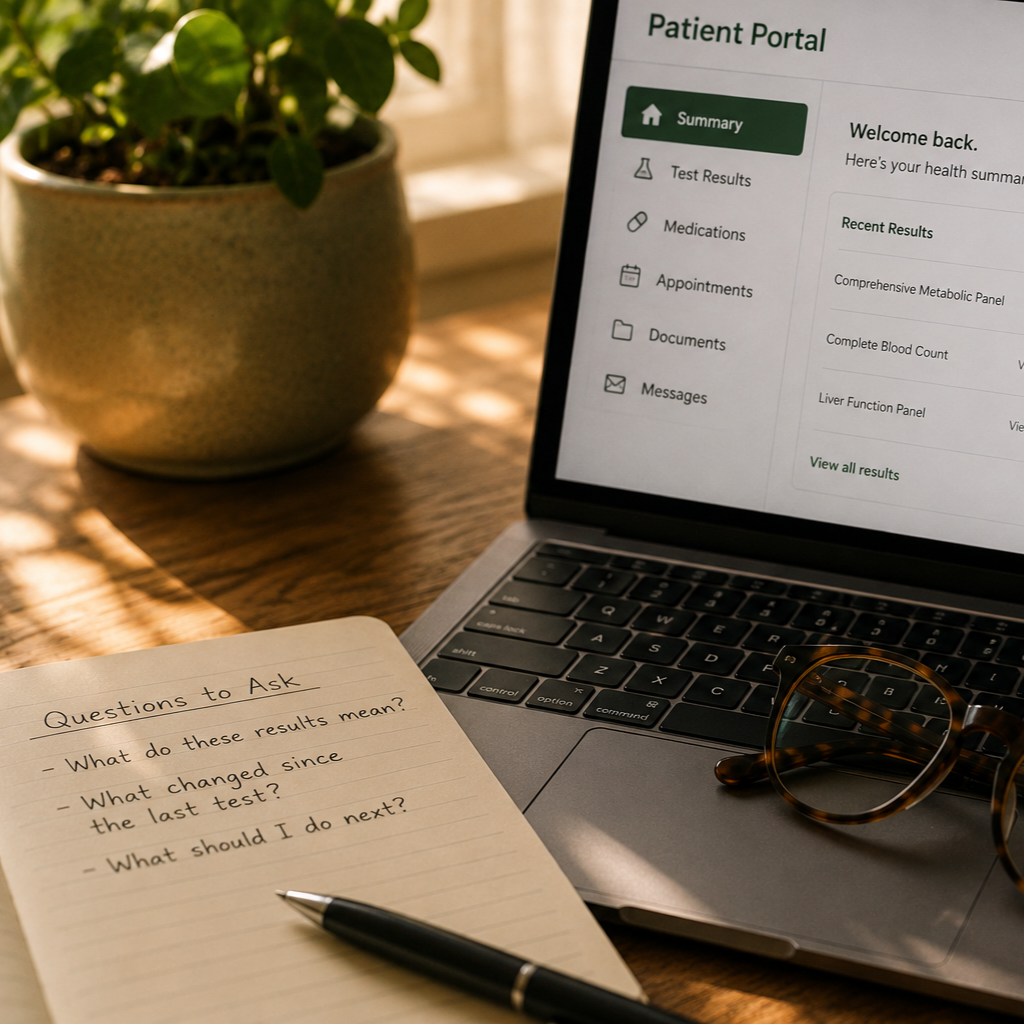
Your medical records contain more than test results and visit summaries. Reading them can help you understand what your care team is seeing, prepare for conversations, notice questions you want to ask, and take a more active role in your healthcare.
We learned that firsthand.
WHY WE STARTED READING OUR RECORDS
Sometimes the record tells you something no one has.
Our habit of reading medical records started with an experience we never forgot.
After an emergency-room visit, Scott logged into his patient portal and began reading the reports from that visit. Buried in the radiologist’s report was a reference to a “known transitional cell carcinoma.”
No one had mentioned cancer. No one had told us they suspected it.
That experience changed the way we thought about medical records. We stopped seeing them simply as documentation of care and started seeing them as another way to understand what was happening, notice things we might otherwise miss, and prepare for conversations with our healthcare team.
We don’t read our records because we’re trying to become our own doctors.
We read them because we want to be active participants in our own healthcare.
WHAT WE’VE LEARNED
Reading your records can help you participate differently in your care.
You don’t have to understand every word in your medical record. We’ve found it helpful to start with four simple things:
1 - READ
Open a recent record available in your patient portal.
2 - NOTICE
Pay attention to anything unclear, surprising, or important.
3 - ASK
Write down what you want your care team to explain or check.
4 - TAKE PART
Use what you learn in conversations and decisions about your care.
TAKE IT WITH YOU
Keep the Practical Guide handy.
Watch the conversation or download a version you can save, print, or take to an appointment.
Both downloadable versions contain the same Practical Guide. Choose the format that works best for you.
WHAT TO LOOK FOR
You don’t need to read everything the same way.
Appointments can move quickly. Your medical record gives you another chance to see what was documented after the conversation is over.
Visit notes
How your care team understood and documented the appointment.
Reports
Imaging, pathology, or other results that may contain details you didn’t discuss in the room.
Plans
Medications, follow-up, tests, or other next steps worth checking.
Something catch your attention?
Pay attention to anything you don't remember discussing, something new or changed, a test or follow-up you didn't know was planned, something that appears incorrect, or language you don't understand.

TURN WHAT YOU NOTICE INTO QUESTIONS
You don’t need to speak medical language.
Your medical record can become part of the conversation between you and your care team. Plain questions work just fine.
Can you help me understand what this means?
Is this new?
How does this compare with my last scan?
Did I understand this correctly?
This does not look right to me. Can we check it?
A useful question does not need to sound medical. It only needs to name what you want to understand.
IF READING RESULTS MAKES YOU ANXIOUS
You don't have to read everything the moment it appears.
Medical records can contain blunt or unfamiliar language. Results may appear in your portal before you've had a chance to discuss them with your care team.
WAIT
You can wait until your appointment or until someone can read the report with you.
READ WITH SOMEONE
Ask a caregiver or trusted person to look with you, or contact your care team.
CHOOSE WHAT WORKS FOR YOU
Being an active participant does not mean reading every result the moment it appears.
Find the approach that gives you enough information without creating more distress than support.
This Practical Guide is based on lived experience and is intended to offer ideas you can consider and adapt to your own situation. Questions about your medical information or care belong with your healthcare team.
We share experiences, not prescriptions.
Continue the Conversation
Reading your records is one way to take a more active role in your care.
In this Foundation Series conversation, we share other ways we’ve learned to participate in our healthcare while still relying on our medical team for their expertise.